



Your law firm for Media law
We take action against false reports and unlawful reviews, support influencer partnerships and social media presences, and advise businesses that publish content of their own – from Hamburg, throughout Germany, in person or by video call.
- anwalt.de · as of November 2026
- Ø 5.0 (197 reviews)
- Experience
- 6,000+ filings
- Legal writing
- 95 publications







Your reputation, your call
A newspaper article, a post, a one-star review: whatever is published about your business spreads fast and stays visible for a long time. German media law gives you tools to defend yourself against untrue statements and defamatory abuse – and sets limits you should respect when publishing content yourself.
Our focus is intellectual property and unfair competition law. We take on media law matters as a complement to that work, often where they overlap with trade mark law, copyright or unfair competition law.
Our services in media law
- 01
Press and reporting
Reply, injunctive relief and correction.
- 02
Negative online reviews
Challenging unlawful reviews on rating platforms.
- 03
Social media and influencers
Partnerships, advertising disclosure and platform rules.
- 04
Broadcasting and media regulation
Licensing, advertising and youth protection rules for media services.
- Other
A different question on media law?
Talk to us directly – we will tell you how we can help.

Reach needs clear rules.
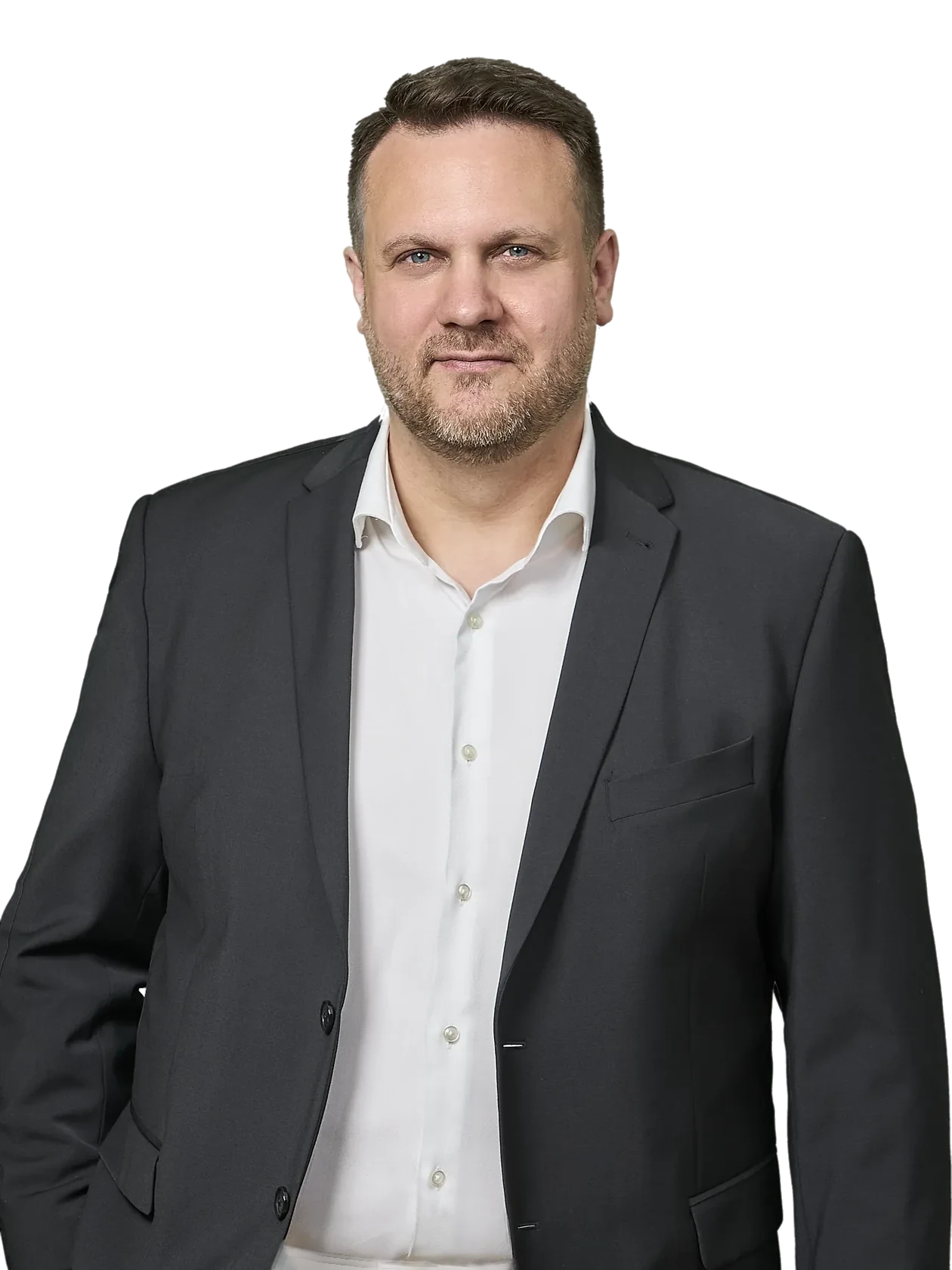
Influencer collaborations, social media campaigns and your own channels are a direct line to customers for many businesses. Advertising disclosure, rights to content and platform rules all meet there – often alongside trade mark and competition law. I draft agreements that settle these questions in advance and take action against account suspensions or the misuse of your content.
I also represent you if you are accused of an infringement yourself, for example for missing disclosure. Write to me briefly about your situation – I will tell you which steps make sense.
Dr. David Slopek, LL.M.Lawyer (Rechtsanwalt)Certified Specialist in Intellectual Property Law (Fachanwalt)
- Phone
- +49 40 882 153 900
What is published about you stays visible for a long time.
A false report or an unfair review often hits a business where it hurts. What helps then is a calm look at the legal position – and an approach that brings the matter to an end rather than making it bigger. That is what I work towards for you.
Write to me or give me a call. I will tell you plainly what you can demand and which route is most likely to get you where you want to be.
Dana LenkeLawyer (Rechtsanwältin)
- Phone
- +49 40 882 153 900
What we do for you in media law
- 01 / 04
Press and reporting
- 02 / 04
Negative online reviews
- 03 / 04
Social media and influencers
- 04 / 04
Broadcasting and media regulation
- Other
A different question on media law?
Frequently asked questions on media law
Your question is not answered here? Write to us – we will get back to you promptly.
Do I have to put up with negative reviews?
Criticism, even harsh criticism, is protected by freedom of expression. You do not, however, have to accept untrue statements of fact, purely abusive criticism or reviews from people who were never your customers. Rating platforms are obliged to look into a specific complaint.
What is a right of reply (Gegendarstellung)?
It allows you to require a media outlet to print or publish your own account in response to a statement of fact it has published. It must be requested without delay and be limited to facts. Whether the original statement was true does not matter for this purpose.
How must influencer advertising be labelled in Germany?
Advertising must be clearly recognisable as such. For paid partnerships or products provided free of charge, a clear notice such as “Werbung” or “Anzeige” (advertisement) at the start of the post is customary. Hidden or ambiguous labelling is often unlawful.
How quickly do I need to act against a false report?
As soon as possible. For a preliminary injunction, German courts require you to act promptly – if you wait several weeks, you risk the court finding that the matter is no longer urgent. A right of reply must also be requested without delay. Save the content immediately, with the date and the address, and have the legal position checked.
Where can I find a media lawyer in Hamburg, Germany?
Hamburg has long been a centre of German press and publication law. Slopek Intellectual Property has its office at Zippelhaus 4, 20457 Hamburg, near Meßberg underground station, and acts as media lawyers from Hamburg throughout Germany. Your contact is Rechtsanwältin Dana Lenke (German-qualified lawyer); the easiest way is to send links and screenshots to dana.lenke@slopek.com.
How much does a media lawyer in Germany cost?
An initial consultation with one of our media lawyers costs EUR 299 plus VAT. Warning letters, counter-statements and urgent proceedings are then charged at a fixed fee, by time spent or under the German statutory fee scale (RVG). If reporting is unlawful, the other side often has to reimburse the costs of a justified warning letter.
What is the difference between a statement of fact and an opinion?
Facts can be proven, opinions cannot. As a rule, you do not have to tolerate untrue statements of fact. Opinions enjoy broad protection under Article 5 of the German Basic Law; the limits are abusive criticism, formal insults and attacks on human dignity. Because many statements contain both, the way a statement is classified often determines the next steps.
May a photo of me be published without my consent?
Generally not: images of a person may only be distributed with that person’s consent (Section 22 German Art Copyright Act, KUG). Exceptions under Section 23 KUG apply, for example, to images from the sphere of contemporary history, to people appearing merely incidentally and to pictures of public gatherings – but never where the legitimate interests of the person shown are violated. Using your image in advertising always requires your consent.
What obligations do platforms have regarding unlawful content?
Since 17.02.2024, the Digital Services Act has applied to online platforms in the EU. Platforms must provide an easily accessible notice mechanism, process notices promptly and give reasons for their decisions (Articles 16 and 17 DSA). If an unlawful post stays online after a sufficiently specific notice, the platform itself can face a claim for an injunction.
What can I do about insults and hate comments online?
First secure evidence – screenshots with date and link. You have claims against the author for an injunction and, in serious cases, for monetary compensation; insult (Section 185 German Criminal Code) and defamation (Section 187) are also criminal offences. If the author is anonymous, a court can permit the platform to disclose their subscriber data (Section 21 TDDDG).